
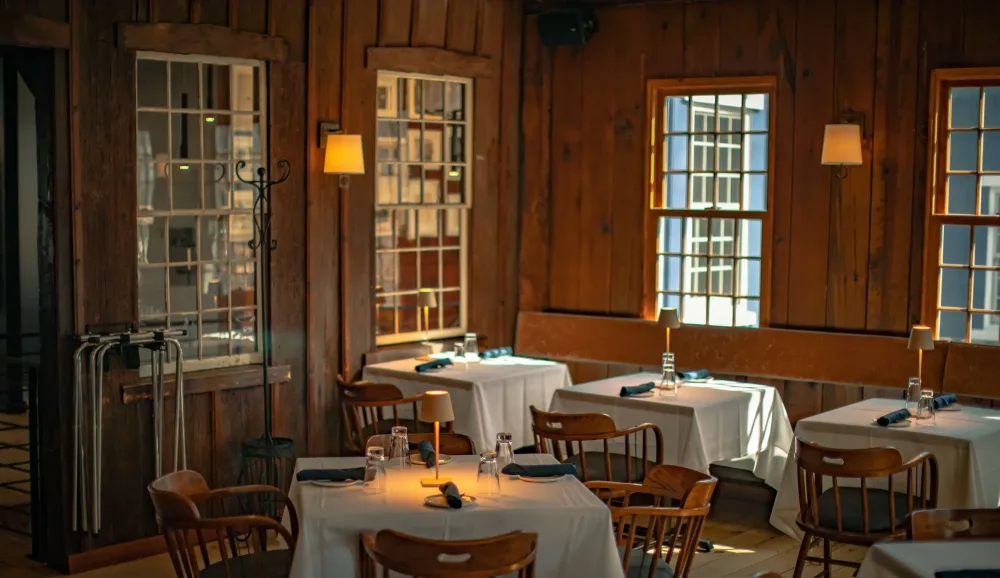
Price group and private event bookings by matching the pricing model to the guest experience, calculating your costs, and accounting for the space and time you reserve. Per-person packages, food and beverage minimums, rental fees, and combinations can all work when the terms are clear.
A large table during normal service is not the same product as exclusive use of an entire restaurant. Price the capacity, privacy, staffing, and planning involved in the actual request.
Choose the model that matches the booking
| Pricing model | Suitable use | What to define |
|---|---|---|
| Per-person menu | Seated meals with predictable service | Included courses, beverages, guaranteed count |
| F&B minimum | Private rooms and receptions | Eligible spend and shortfall treatment |
| Fixed rental | Exclusive space or special access | Hours, equipment, staffing, reset |
| Hourly rental | Time-sensitive space access | Minimum hours and approved extensions |
| Hybrid | Exclusive access plus hospitality service | Which charges are separate or credited |
Avoid presenting overlapping charges as if they buy the same thing. If a rental fee covers exclusivity and an F&B minimum covers hospitality purchases, explain both.
Cost the package before naming a price
Estimate ingredients, beverages, service labor, preparation, setup, reset, rentals, and relevant payment or platform costs. Separate costs driven by guest count from fixed costs of the booking. Account for expected consumption and waste using your own experience.
For a buyout, include the contribution lost from displaced service. For a group seated during normal operations, examine whether table occupancy prevents other profitable turns or creates additional staffing needs.
Shared overhead still matters to the business. A positive event contribution is not the same as net profit after rent, salaried management, insurance, and other overhead. Your contribution target should support those costs and the return you need.
Understand markup and margin
Markup is measured against cost. Margin is measured against selling price. Confusing them produces a smaller margin than intended.
Illustrative example: if a package costs $40 per guest in the costs being measured, a 50% markup gives a $60 price. The resulting margin on those costs is 33.3%, because $20 ÷ $60 = 33.3%. To achieve a 50% margin on the same cost base, the price is $80: $40 ÷ (1 − 0.50).
Label the cost base. A margin calculated from food ingredients alone is not the event's final profit margin.
Offer useful package choices
Create a small number of options with differences that matter to the planner. A team lunch might prioritize timing and ease. A reception might prioritize food stations and beverage service. A celebration dinner might add a dessert course or approved customization.
Keep the core package complete enough to host the promised event. Do not advertise a low price that excludes mandatory staffing or essential equipment. Show optional upgrades separately so the planner can control the budget.
For beverages, choose a structure your operation can manage, such as consumption-based hosted service, a defined package where permitted, or individual purchases. State duration, inclusions, and approval rules for changes. Confirm the approach complies with your alcohol license and local requirements.
Explain how headcount affects the total
Use an estimated count for planning and a final guaranteed count for the agreed billing basis. State the guarantee deadline, whether late increases can be accepted, and how additional guests are charged. A lower turnout does not automatically change a guarantee, but the agreement must explain the applicable terms.
If a per-person package also has a minimum, show both. For example, 40 guests at $75 produce $3,000 in package charges. With a $3,500 applicable minimum and no other qualifying purchases, the difference is $500, subject to the agreed shortfall treatment. Do not hide the minimum behind the per-person figure.
Present an itemized estimate
Show food, beverages, rental, mandatory charges, applicable tax, and optional items separately, together with the estimated total. Explain the calculation base for percentage charges. State what could change the final amount, including consumption, guest count, or approved overtime.
For US federal tax purposes, mandatory service charges are different from voluntary tips; amounts distributed to employees are treated as wages. Your local disclosure and tax obligations also need to be reflected in your pricing. IRS guidance.
Connect the price to a clear event offer
Once the package is costed, describe its value on your website and venue listing. RestauRent is a relevant discovery channel for hospitality venues whose event experience includes food, beverages, or both. Give planners a clear starting point and move suitable inquiries into a detailed proposal.
Frequently asked questions
Is per-person pricing better than a minimum spend?
Neither is universally better. Per-person pricing helps with predictable meal service; minimums can work for private space and variable consumption. Use the model that fits the event and explain any combination.
Can I charge both a rental fee and a food minimum?
Yes, where permitted and agreed, but disclose what each charge covers. Explain whether the rental fee counts toward the minimum or is additional.
Should I copy another venue’s prices?
Use comparable offers to understand the market, then price your own costs, demand, capacity, and service. A competitor’s headline may exclude charges or cover a different experience.
Review current signup terms and plan details before enrolling.
Related resources
- How to set a food and beverage minimum for private events
- Restaurant buyout pricing worksheet
- How to charge for group and private event bookings
- How to increase private dining sales without relying on discounts
Source information reviewed October 15, 2026: IRS tip recordkeeping and reporting.